Book
Diaspora
★★★★☆
July 23, 2026 · by Nolan Mercer
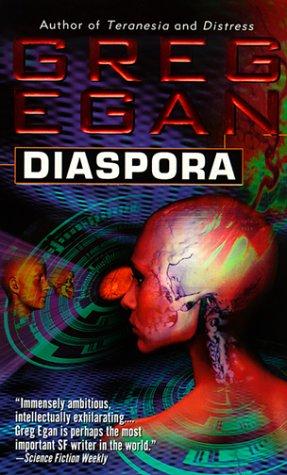
There’s a version of this review that just says “warning: math” and stops, and honestly that would be fair. The opening stretch of this book is a dense, almost textbook-style walkthrough of how a digital consciousness comes into being inside a polis, and I put it down twice in the first week trying to get through it. Stuck with it because enough people I trust said the payoff was worth the toll, and it was, but I won’t pretend the toll isn’t real.
Once the actual plot kicks in, humanity split three ways between digital citizens, embodied robots, and genetically diverging “fleshers,” the book turns into something closer to a series of linked stories than a single narrative, each one following the same handful of characters into wildly different physical and philosophical territory. That structure is either a feature or a flaw depending on what you came for. I came in wanting a plot and got more of a thought experiment with recurring characters, closer to a materialist meditation on meaning than a conventional novel, and I had to recalibrate what I was reading about a third of the way through.
The scenes that stuck with me weren’t the ones with the most drama, they were the smaller, weirder ideas, a character cloning themselves into a universe with entirely different physical laws just to see what happens, which is the kind of premise most authors would build an entire trilogy around and Egan just spends thirty pages on and moves on.
I’m an engineer, I don’t scare easily at math showing up in fiction, and even I found long stretches where I let the physics fade into background noise rather than trying to fully track it. If you’re willing to do that, to treat the hard-science passages the way you’d treat scenery rather than plot, there’s a genuinely enormous, strange book here.
Four stars. Not an easy recommendation, but a real one.